Neighbourhood notebook — 24 July 2026
Barrio Amón on foot
Example
North of central San José, Barrio Amón lines up the houses built by coffee families between 1890 and 1930. The neighbourhood takes an hour to cross; it deserves a full morning.
Barrio Amón covers a handful of streets north of central San José, between Avenida 7 and the ravine of the Río Torres. You can cross it in an hour. To read it properly takes a morning, and a habit of looking up.
The coffee houses
The neighbourhood dates from the 1890s, when families made wealthy by coffee left the centre to build on these slopes. It carries the first name of Amon Fasileau Duplantier, a French coffee trader who parcelled out the land at the time. The families built to their own tastes: tropical hardwoods, bricks and ironwork shipped from Europe, verandas facing the street.
The result is still there, house by house. Here a painted timber pavilion with a porch, there a façade faced in ceramic tiles, further on a concrete villa with the geometric lines of the 1930s. Some houses have been restored, others are waiting. All of them are best read from the pavement.
The streets follow the San José grid: avenidas running east to west, calles north to south. Avenida 9 and Calles 3 to 7 hold most of it. Distances are short; you find yourself passing the same façade twice without minding.
Two parks and a bandstand
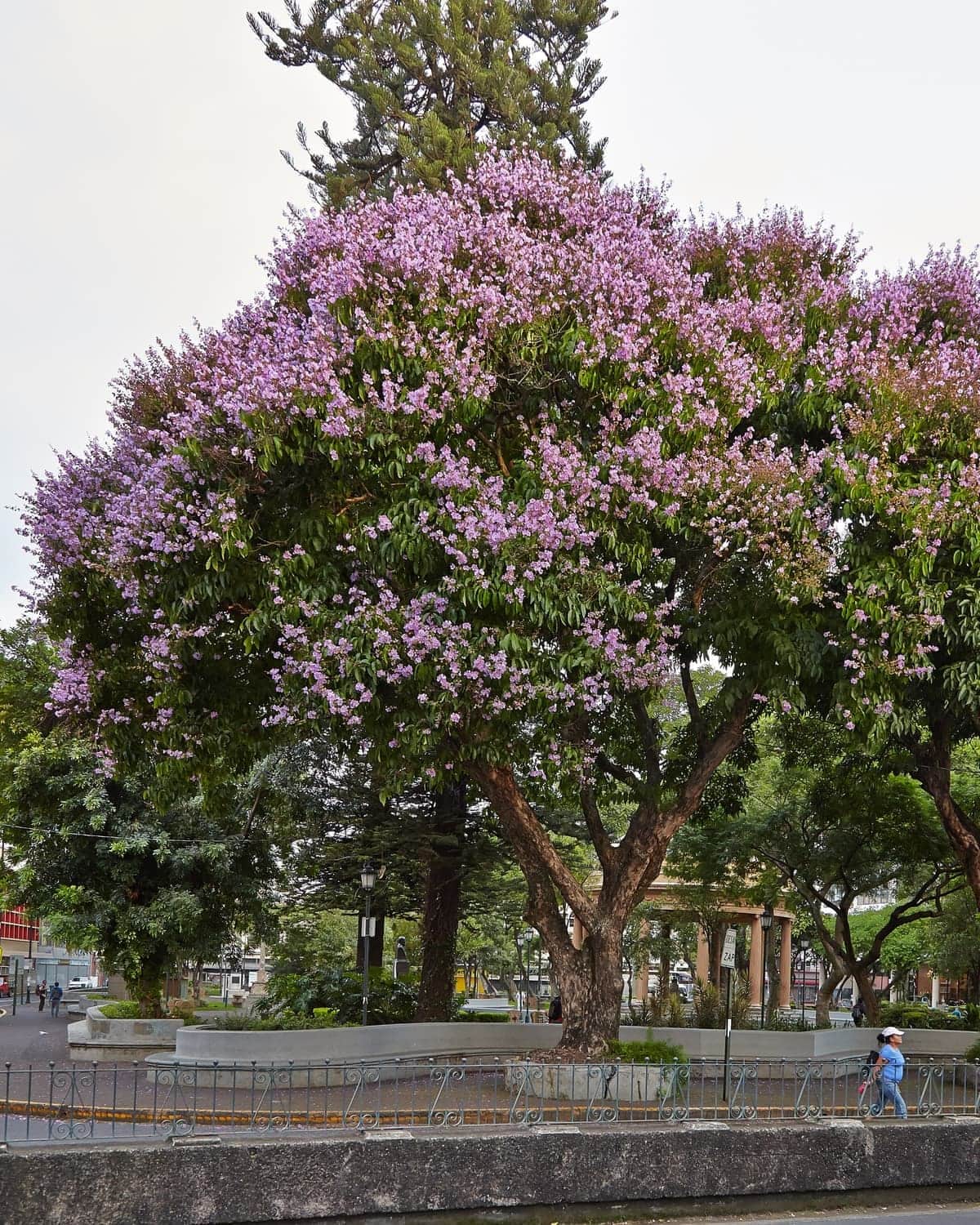
At the southern edge, two parks sit side by side. Parque Morazán is arranged around its domed bandstand, the Templo de la Música, built in 1920. In the evening people sit there; in the morning you cut across it diagonally.
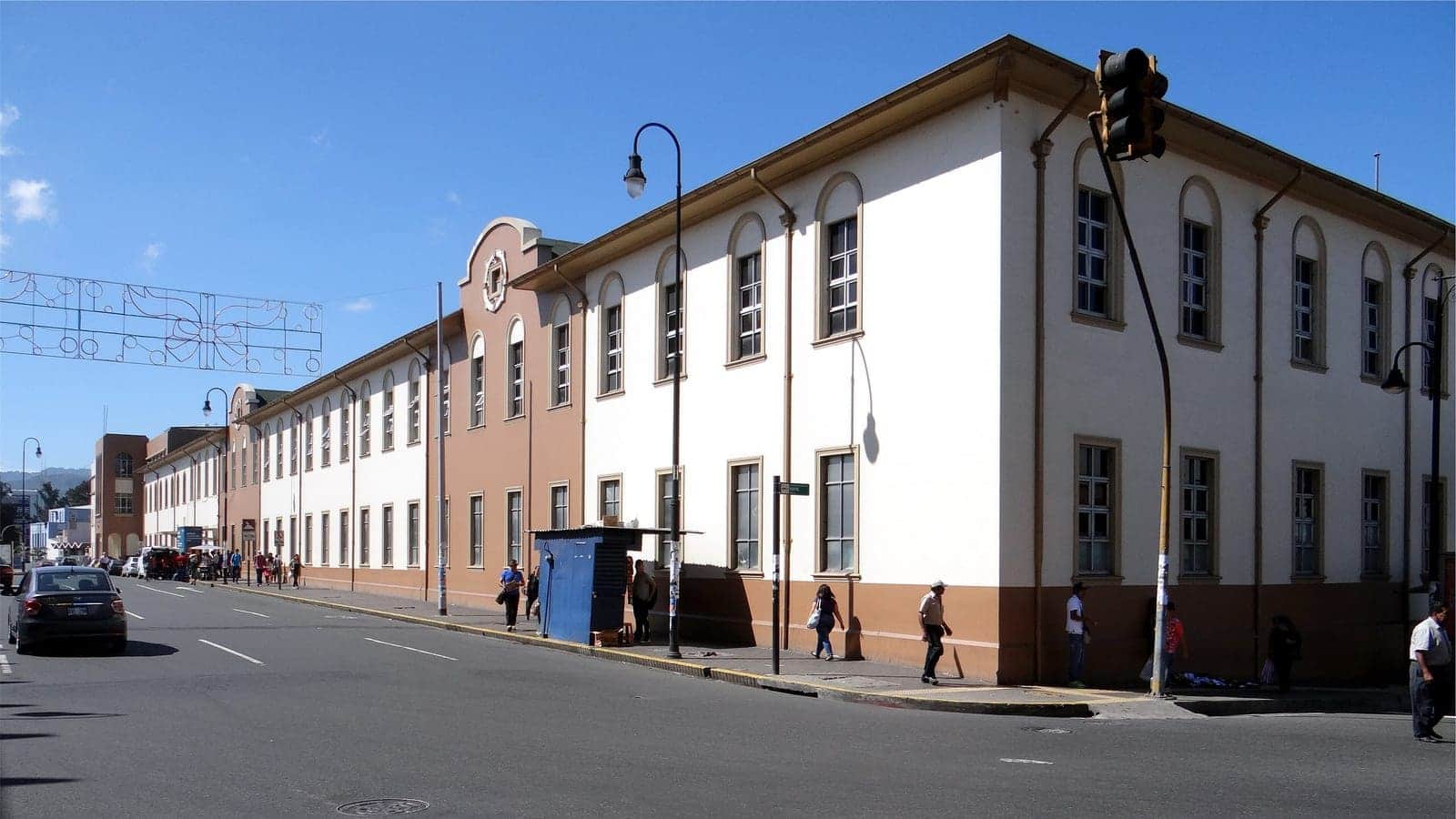
Parque España, just to the east, is denser: tall trees, deep shade, short paths. On its edge stands the Edificio Metálico, a school whose metal panels were cast in Europe and assembled on site at the end of the nineteenth century. It is still a school; when classes let out, the whole neighbourhood changes tempo.
The central market
Some ten blocks to the south-west, the central market has occupied the same block since 1880. You enter through a narrow doorway; inside, covered aisles cross one another like streets.
The stalls follow the order of daily life: flowers, herbs, fish, sacks of coffee beans, hardware. Lunch is eaten at a counter, elbow to elbow, from the plate of the day. The market closes on Sundays; late on Saturday morning, it is full.
Walking, plainly
San José explains itself through distances. Addresses are given in metres from a known landmark: a hundred metres north of the church, two hundred east of the park. A hundred metres equals one block. The system confuses you for a day, then becomes second nature.
The city sits at 1,150 metres above sea level. Mornings are mild; from May to November, the rain arrives late in the afternoon. The neighbourhood's rule follows from this: walk in the morning, be under a roof when the rain comes, go back out afterwards.
On Sundays the neighbourhood is at its quietest. The schools are closed, and so is the market; what remains are the parks, the façades and the birds down in the ravine. It is the day to photograph the houses without waiting for a gap between passers-by.
From Barrio Amón, the pedestrian Avenida Central is a quarter of an hour's walk to the south. Head down towards the end of the morning, as the neighbourhood's streets fall quiet and the centre, for its part, begins.
The editors